

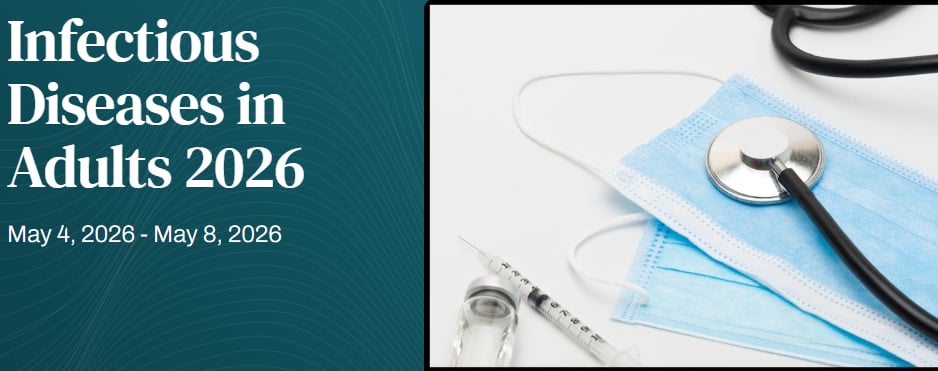
Harvard Infectious Diseases In Adults 2026 (Videos + PDFs)
- Format: 62 MP4 + PDFs
- Posted Date: 02 Jun 2026
- Posted By: Dr_magic
Specification
| Published Year | 2026 |
|---|---|
| Language | English |
| Publisher | Harvard Medicine |
| Edition : | 2026 |
| Format : | 62 MP4 + PDFs |
| File Size : | 16700 |
Description
The Harvard Infectious Diseases In Adults 2026 program provides a comprehensive, expert-led review of the most current developments in diagnosing and managing complex infectious diseases. The curriculum covers a wide array of high-yield topics, including antimicrobial stewardship, emerging fungal and viral infections, HIV management, and multidisciplinary approaches to challenging cases such as endocarditis, bone infections, and mycobacterial diseases.
Course Date: May 4, 2026 – May 8, 2026
Infectious Diseases in Adults 2026 provides state-of-the-art approaches for the prevention, diagnosis, and management of infectious diseases: common, challenging, rare, and emerging.
State-of-the-Art Approaches to Prevention, Diagnosis, and Treatment of Infectious Diseases in Adults
Infectious Diseases in Adults 2026 is LIVE STREAMED with on-demand access available for 90 days after the course.
This comprehensive CME program, now in its 50th year, ensures attendees are current with state-of-the-art approaches to prevention, diagnosis, and treatment of infectious diseases. Updates, best practices, and new guidelines are presented by nationally recognized ID experts and master clinicians. Education is practical and results-driven:
- Optimal decision-making across a range of common and unusual infectious diseases
- Newer antimicrobials and treatment strategies for highly resistant infections
- Prevention and treatment of infections in immunocompromised hosts
- Update on antifungal diagnostics and therapy
- State-of-the-art and multidisciplinary approaches to common infections
- Clinical approaches to complex, rare, and “don’t-miss” infections
- New, evolving, emerging, and re-emerging infectious diseases
- Infections in persons with substance use disorder
- What’s new in HIV prevention and management
- The latest on COVID-19, including long COVID
- Adult vaccinations in 2026
As revised treatment strategies, new diagnostic tests, and guidelines are presented, they are coupled with specific recommendations for incorporating these updates into your day-to-day work.
In addition to being live streamed, all sessions will be recorded and placed in the online course library, enabling registrants to view them at their convenience. Recordings will be available for viewing for 90 days after the conclusion of the course. All live streaming and recorded sessions are eligible for AMA PRA Category 1 Credits™ and other relevant credits. (Note: Evaluations must be completed within 60 days of the conclusion of the course to receive CME credit.)
Highlights of the 2026 Program
Expanded Case-Based and Problem-Solving Education
The 2026 program features an expanded range of interactive, case-based, and problem-solving education. The formats are engaging, and attendees are encouraged to pose questions to our national experts in live question-and-answer sessions following the lectures and the multidisciplinary workshops.
Our speakers and panelists include not only ID experts, but those from fields such as pharmacy, surgery, radiology, cardiology, pulmonology, and addiction medicine, thereby providing a 360-degree context for the understanding of ID treatment and patient care.
Our ten multidisciplinary workshops include complicated urinary tract and intra-abdominal infections, resistant Gram-positive and Gram-negative infections, management of endocarditis and cardiac device infections, musculoskeletal infections, and nontuberculous mycobacterial infections.
Treating Highly Resistant Infections, including:
- MRSA and VISA (vancomycin-intermediate Staph aureus)
- Extended-spectrum beta-lactamase (ESBL)-producing Gram-negative rods
- Carbapenemase-producing Gram-negative rods, including NDM-1 metallo-beta-lactamase-producing organisms
- Vancomycin-resistant enterococci (VRE)
- Resistant fungal infections, including Aspergillus, other molds, and resistant Candidal infections
- Nontuberculous mycobacteria (NTM)
Common Infectious Diseases: Updates in Prevention, Diagnosis, and Treatment, including:
- Respiratory viral infections, including COVID-19
- New and updated vaccine guidance
- Infections in the expanding populations of immunocompromised hosts
- Infections in persons with substance use disorder
- Infections of travelers and foreign-born persons
- Systemic fungal infections
- Native and device-related orthopedic infections
- Central nervous system (CNS) infections
- Native and prosthetic valve endocarditis, and cardiac device infections
- Ear, nose, and throat (ENT) and eye infections
- Skin and soft tissue infections
- Bronchiectasis and pneumonia
- HIV and its infectious and noninfectious complications
- PEP (Post-Exposure Prophylaxis) and PrEP (Pre-Exposure Prophylaxis) to prevent HIV infection
- Sexually transmitted infections (STIs), including mpox and PEP for prevention of STIs
- Hepatitis B and C infections
- Tick- and mosquito-borne infections
- Clostridioides difficile infection, the gut microbiome, and pre- and probiotics
- Complicated urinary tract infections
- Intra-abdominal infections
Challenging, Rare, and Emerging Infectious Diseases, including:
- Highly pathogenic avian flu
- Re-emergence of vaccine-preventable diseases, including poliomyelitis
- Pulmonary and extrapulmonary non-tuberculous (“atypical”) mycobacteria, including Mycobacterium abscessus
- Global infectious diseases of clinical importance
Clinical Decision-Making
Hear directly from world-renowned specialists and master clinicians on their approach and decision-making criteria for:
- Selecting the best antimicrobial and duration of treatment
- Rapid detection and empiric treatment of life-threatening infectious diseases
- Choosing between inpatient and outpatient treatment, and between intravenous and oral antimicrobials
- Optimizing empiric antimicrobial therapy: what to start, and how and when to de-escalate
Our multidisciplinary talks and workshops incorporate safety, quality, and practice improvement in infectious diseases, including:
- Antimicrobial stewardship to prevent resistance and reduce cost
- Early inpatient ID consultations to improve outcomes
- Strategies for management of infection in persons who inject drugs (PWID)
DETAILS
-
Publisher
-
Language
-
Category